


A Fishing Wader Review for UK Bank Anglers
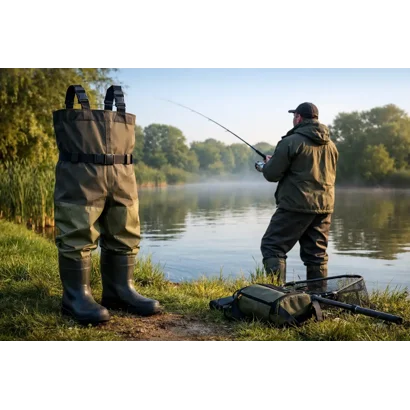
A Fishing Wader Review for UK Bank Anglers
17 September 2026 - 0 Comments
Posted by Mick
A Fishing Wader Review for UK Bank Anglers
A pair of waders earns its keep the first time a good swim is just beyond casting range, the bank is soft underfoot, or a cold river rules out a quick paddle in ordinary boots. This fishing wader review focuses on what actually matters for UK anglers: staying dry, keeping your footing, moving comfortably and buying a pair that suits the fishing you do rather than a feature list you may never use.
Waders are not all built for the same job. The best pair for a summer evening on a shallow chalk stream will not necessarily be the sensible choice for winter pike fishing from a muddy reservoir edge. Before comparing prices or materials, think about where you fish, how far you walk and how often you expect to be in the water.
Start with the water you fish
For occasional trips into slow, shallow water, simple PVC or nylon waders can offer very good value. They are straightforward, hard-wearing for the money and easy to clean after a muddy session. They are also less breathable, so they can feel warm and clammy if you are walking any distance or fishing through mild weather.
Breathable waders cost more, but their advantage is clear to anyone who covers ground. Moisture from the inside can escape more readily, making them much more comfortable when walking riverbanks, stalking carp margins or moving between pegs. They are not automatically warmer, however. In cold conditions, warmth comes from the layers worn underneath, not from the breathable fabric itself.
Neoprene waders remain a sensible option for anglers who regularly fish cold water. The material adds insulation and can be reassuring for winter work, particularly where you are standing still for long periods. The trade-off is bulk and reduced comfort in warmer weather. A heavy neoprene pair can feel like too much kit on a mild day, especially if the walk from the car is longer than the time spent in the river.
Fishing wader review: the details worth checking
The label may mention material thickness, pockets and reinforced panels, but a few practical details make the biggest difference once waders are in regular use.
First, inspect the seams. Stitched and taped seams are standard on better waders, with the tape protecting the needle holes that would otherwise let in water. Pay close attention to the inside leg, seat and crotch areas. These are high-wear points, particularly if you climb stiles, kneel to land fish or sit on a wet bank while sorting tackle.
Reinforcement is worth paying for if you fish hard ground, bramble-lined rivers or rough lake margins. Extra material around the knees and seat helps with the abrasion that eventually shortens a wader's life. It adds some weight, but this is usually a fair exchange for anglers who use their kit week after week.
Pockets should be useful rather than merely plentiful. A chest pocket that keeps forceps, tippet, a phone or a small box close to hand is genuinely handy. Deep hand-warmer pockets are welcome on cold days, but remember that anything carried high on the chest can make wading less comfortable if it is overfilled.
A gravel guard is another small feature with a large benefit. It sits over the boot or stocking foot and helps stop grit entering around the ankle. Sand and small stones soon become irritating, and they can cause unnecessary wear where fabric and footwear meet.
Bootfoot or stockingfoot waders?
This choice affects comfort, grip and how easily the waders work with the rest of your fishing clothing.
Bootfoot waders have boots permanently attached. They are convenient for casual use because there is no separate footwear to buy or carry, and they are often the most cost-effective route into wading. They suit stillwater margins, shallow coarse fishing spots and anglers who want a simple set-up that can be pulled on quickly. The downside is that sizing can be less precise, and the boots are heavier when walking.
Stockingfoot waders finish with neoprene socks and need separate wading boots. This arrangement offers a closer fit and gives you more choice over sole type and ankle support. It is usually the better option for river anglers who walk uneven banks or cover several miles during a session. Separate boots also make it easier to replace the footwear when it wears out, rather than retiring the whole set of waders.
For grip, felt soles can perform well on certain smooth, slippery rocks, but they are not ideal everywhere and may be restricted on some fisheries because they can carry invasive organisms between waters. Rubber soles with a deeper tread are versatile for mixed banks, gravel and general use. Studded soles add confidence on particularly awkward ground, although they can be noisy on hard paths and less pleasant to wear in a vehicle.
Getting the fit right
Waders should be roomy enough to let you crouch, step up a steep bank and wear suitable layers, without leaving excess material hanging around the legs. Too-tight waders restrict movement and put strain on seams. Oversized waders can snag on vegetation, catch water and feel cumbersome when you need steady footing.
Take measurements in the clothing you expect to wear most often. For much of the year, that may mean thermal leggings and a fleece layer rather than jeans. Check chest, inside-leg and foot measurements against the manufacturer's guide, and do not assume your normal shoe size is enough for bootfoot models. If you are between sizes, the right answer depends on whether winter layering or summer mobility matters more to you.
With stockingfoot waders, make sure the neoprene socks do not pinch the toes once they are inside your chosen boots. A little extra room in the boot is usually needed, but a boot that is too loose allows the foot to move around and can lead to rubbing on a long walk.
Do not overlook safety
Waders help you reach the fish, but they do not make deep or fast water safe. A wading belt should be worn whenever practical. If you do fall, it can slow the amount of water entering the legs and make it easier to regain your footing. A proper wading staff is equally worthwhile on unfamiliar rivers, especially where the bottom is uneven or coloured water hides holes.
Move sideways or slightly upstream where possible, keep your feet low to the bed and test each step before committing your weight. This sounds basic, but most problems start when an angler tries to hurry across a section that deserves more care. Cold water, strong flow and slippery stones can turn a routine crossing into a difficult situation very quickly.
Avoid wading simply because you can. Often the better approach is from the bank, particularly on smaller rivers where entering the water may disturb the very fish you are trying to catch.
Care that extends a wader's life
A good pair of waders should be rinsed after use, particularly after saltwater fishing or silty venues. Let them dry naturally, inside and out, away from direct heat. Do not leave them folded damp in a car boot or tackle shed, as trapped moisture encourages odour, mildew and deterioration around seams.
Hang waders by their braces or store them loosely rather than creasing them sharply for long periods. Before each trip, check the soles, seams and any obvious scuffs. A small puncture caught early is far easier to repair than a leak discovered halfway through a cold session.
For breathable models, occasional cleaning with a suitable specialist wash helps remove mud, sweat and body oils that reduce fabric performance. Waterproof treatments can also be renewed where appropriate, but use products intended for technical wader fabrics rather than general household sprays.
Choosing value, not just the lowest price
The cheapest waders can be the right purchase for an angler who only occasionally steps into shallow water. Spending more makes greater sense when comfort, walking distance and frequent use are part of the picture. There is little value in a premium breathable model if it is only used twice a year, just as a budget PVC pair may become false economy for someone fishing rivers every weekend.
At The Country Sports Store, the useful starting point is to match the wader to the session: lightweight and practical for occasional bank access, insulated for cold-water work, or breathable with proper boots for regular river fishing. Buy for the ground beneath your feet and the months you fish most, and the right pair will become the kit you put on without a second thought.
Optional, for replies
No comments posted yet, check back soon.


