Fly Fishing Vest vs Backpack: The Main Difference
A missed rise in the last half-hour of light is not the time to be emptying your kit onto the bank to find a tippet spool. The fly fishing vest vs backpack choice comes down to how you fish, how much you carry and how quickly you need to reach it. Both are useful bits of tackle, but they solve different problems on a river, reservoir or small stillwater.
For many UK anglers, the best answer is not simply the biggest bag or the vest with the most pockets. It is the option that keeps your essential flies, leaders, tools and waterproofs organised without making a day on the bank uncomfortable.
Fly Fishing Vest vs Backpack: The Main Difference
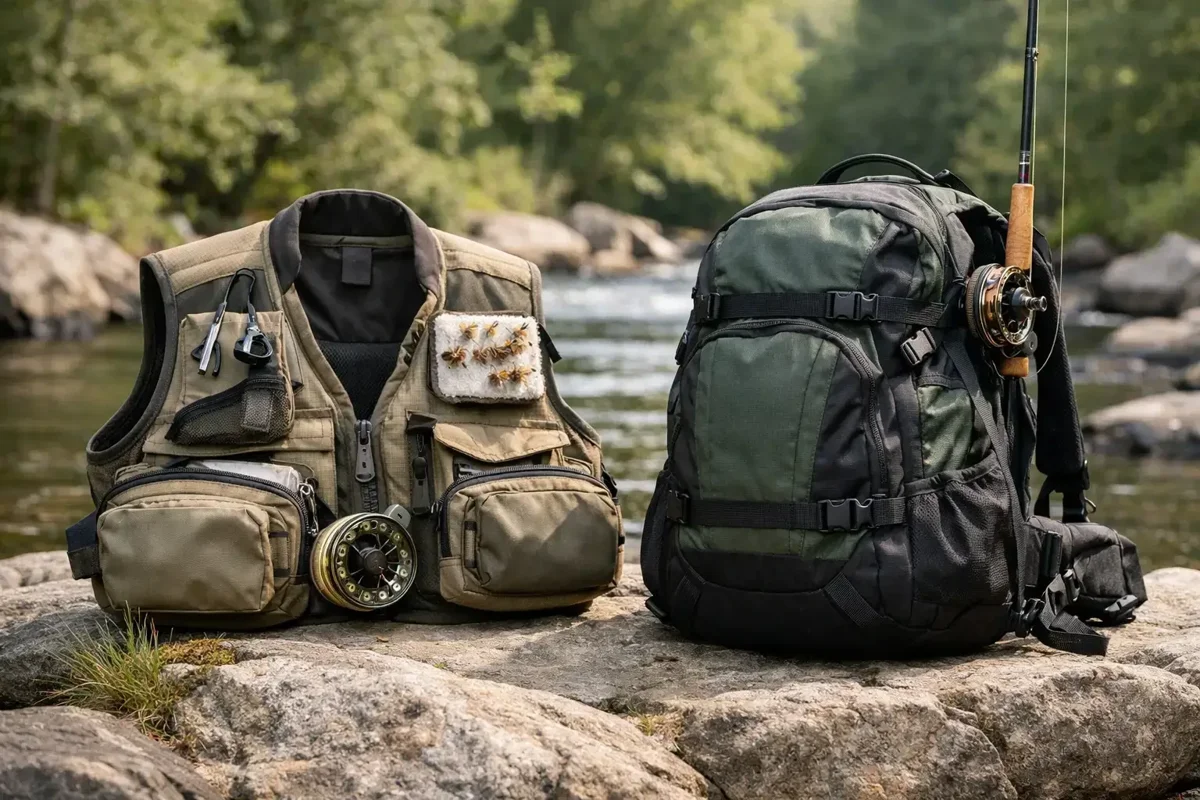
A fly fishing vest keeps small, regularly used items on your body and close to hand. Its front pockets are designed for fly boxes, floatant, tippet, indicators, forceps and a small camera or phone. You can change a fly, add a split shot or replace a leader without taking your gear off or turning away from the water.
A backpack carries more equipment and spreads the load across both shoulders. It is better for spare layers, food, a flask, a larger fly box selection, landing-net accessories and the odds and ends needed for a full day out. The compromise is access. Every time you need something inside, you generally need to take the pack off or swing it round.
Neither is automatically the better choice. A lightly equipped river angler covering water all day will often appreciate the immediate access of a vest. Someone walking to a remote loch, spending a long day on a reservoir bank or travelling with extra clothing may find a backpack far more practical.
When a Fly Fishing Vest Makes Sense
A vest earns its place when fishing is active and changes happen quickly. On a chalk stream, small river or overgrown brook, you may be moving every few casts, adjusting depth and swapping patterns as the light, current and insect activity change. A well-arranged vest means the essentials are where your hands expect them to be.
The strongest advantage is efficiency. Keep one fly box in each main pocket, tippet on a holder or in an accessible pocket, and tools on retractors or attachment points. There is less faffing about and less chance of putting a small item down in long grass. This is particularly useful when wading, where stopping to open a pack can be awkward and where loose kit has a habit of ending up in the water.
Vests also work well for anglers who prefer to travel light. If you can manage with two or three fly boxes, a leader wallet, a small drink and a compact waterproof, a vest keeps the weight close to your torso without the bulk of a pack behind you. It is a sensible setup for an evening session after work or a half-day on a familiar beat.
That said, more pockets do not always mean better organisation. Overfilling a vest can make it heavy at the front, restrict movement when casting and leave you rooting through several similar pockets. Start with the tackle you use most often, rather than trying to carry every fly and accessory you own.
Vest comfort and fit
Fit matters more than pocket count. The shoulder area should sit comfortably under a jacket, while the vest needs enough adjustment to work over a T-shirt in summer and insulating layers in colder weather. Check that it does not ride up when walking or snag on your casting arm.
A breathable mesh-backed vest is useful in warm weather, especially when walking between pools. In colder, wetter months, it should still sit comfortably over a waterproof jacket. If you wear a buoyancy aid when fishing from a boat, make sure the vest does not interfere with it. Safety kit takes priority over storage.
When a Fly Fishing Backpack Is the Better Choice
A backpack is the sensible option when the journey, conditions or length of session call for more gear. UK weather can change quickly, and a pack gives room for a proper waterproof, spare mid-layer, packed lunch, drink, gloves and a dry bag for valuables. That extra capacity is valuable on a large reservoir, a hill loch or any water where returning to the car is not convenient.
It is also a strong choice for anglers who like a broader fly selection. Reservoir fishing may call for dries, nymphs, blobs, lures and buzzers in several sizes and colours, with different lines and leaders to match. A backpack lets you carry this kit without cramming boxes into every vest pocket.
For travelling anglers, a pack can be easier to organise before setting off. Use separate pouches for flies, terminal tackle, food and clothing so that wet or muddy items do not end up mixed with everything else. A water-resistant outer fabric is helpful, but it is worth remembering that water-resistant is not the same as waterproof. Put a phone, keys, licence and spare dry layers in a waterproof pouch or dry bag where necessary.
The drawback is that a conventional backpack can be inconvenient during the fishing itself. If your tippet, forceps and current fly box are all in the main compartment, small jobs soon become slow jobs. This is why many anglers use a pack for bulk kit but carry a small chest pack, waist pack or vest for the items needed at each stop.
Backpack comfort and practical features
Look for padded, adjustable shoulder straps and a stable fit rather than simply chasing litres of capacity. A pack that shifts from side to side while you cast will become irritating quickly. A chest strap can help keep it secure on rough ground, while a breathable back panel is welcome on a summer walk.
Consider where your landing net will go. External attachment points can be useful, but a net should be secure enough not to catch branches, fences or reeds. Side pockets for a water bottle, external loops for a jacket and easy-grab pockets for a leader wallet are all genuinely useful features when they suit your own routine.
Take care if you wade deep. A backpack can alter your balance, catch water and make a slip more difficult to recover from. Keep it light, fasten the straps correctly and avoid carrying more than you need when conditions are challenging.
Capacity Is Not the Only Question
The common mistake is choosing a vest because it has dozens of pockets, or a backpack because it holds the most gear. The better question is what needs to be accessible during the next hour of fishing.
For a short river session, that might be one small fly box, tippet, leaders, forceps, floatant, nippers, a compact rain jacket and a drink. A vest handles that neatly. For a day on a windswept reservoir bank, add spare clothing, lunch, multiple fly boxes, sunglasses, a flask and perhaps a spare reel or line. A backpack quickly becomes the more comfortable option.
Your fishing method matters too. Dry-fly fishing often demands regular fly changes, gel or powder floatant, tippet and careful presentation, all of which favour vest access. If you are fishing a small number of lures from one section of bank, the need for constant access is lower, so a pack is less of a hindrance.
A Useful Middle Ground
Many experienced anglers eventually use both. A vest covers mobile, light sessions, while a backpack comes out for longer walks and bigger waters. Another practical arrangement is a small vest or chest pack for fishing essentials, paired with a lightweight backpack holding clothing, food and backup tackle.
This combination avoids stuffing your front pockets until they drag, yet keeps your frequently used kit within reach. It can be especially useful on changeable spring and autumn days, when you may start in a fleece and finish in a waterproof.
If buying one piece of storage first, be honest about your usual fishing rather than your occasional trip. Anglers who mostly fish local rivers for a few hours will get more day-to-day use from a comfortable vest. Those who walk distances, fish all day or need spare layers will usually appreciate a backpack’s capacity.
Choosing the Right Setup for Your Fishing
Before choosing, lay out the kit you genuinely take on a normal session. Include the unglamorous essentials: water, food, waterproofs, sunglasses, phone, keys and any medication, not just fly boxes and tools. That gives a much clearer picture of the storage you need.
Then think about access. Put the items used every few minutes at the front or in the easiest pocket. Keep backup tackle, spare layers and lunch in the rear. A tidy system makes you more efficient on the water and helps protect small, easily lost items.
The right carrying setup should fade into the background once you start fishing. Choose the one that lets you walk comfortably, cast freely and reach the next fly without taking your attention off the water.



Thank you for posting your blog comment. It will be reviewed and set live soon. If you provided your email then you will be notified of replies to this comment.